Symposium “Zones of Care” in the Museum of Yugoslavia
On June 4th and 5th, 2026, the Museum of Yugoslavia will host the international symposium “Zones of Care” organised by the Academy of Fine Arts in Vienna. The symposium brings together PhD researchers from the Academy, and scholars in heritage studies, museum and curatorial studies, art history, philosophy and environmental humanities from Serbia, Austria and the United Kingdom.
The symposium borrows the notion of “zones of care” from medical and emergency contexts, where the term designates graduated levels of threat and urgency—from sites of immediate danger to partially secured areas and, finally, protected spaces removed from risk. Recast in relation to archives, museums, and environments, this framework offers a critical lens through which to apprehend how threats and urgencies are produced, inhabited, and contested from radically situated scholarly-activist perspectives, and how they are differently framed within geopolitical logics of influence and power. It foregrounds the uneven distribution of care and neglect, asking how vulnerability, preservation, and exposure are differentially allocated across cultural and ecological spaces, and to whose endurance such arrangements remain tethered. Hosted at the Museum of Yugoslavia, the symposium creates a platform for exchange between PhD researchers at the Academy of Fine Arts Vienna and scholars in heritage, museum and curatorial studies and the environmental humanities.
The symposium creates a platform for international exchange of knowledge and contemporary research approaches, raising questions about how to think and practice care today in a world marked by multiple social, political and ecological crises.
Admission to the symposium is free, and a detailed program and schedule can be found below. The symposium will be held in English.
June 4th, 2026
15.00 – 17.00 h
Welcome by the Museum of Yugoslavia
Introduction to the Symposium by the Academy of Fine Arts Vienna
Zones of Care –Working with the Archive
Jelena Micić
Approaching the Family Archive: Material Relations and Non-Alignment
Anna Mikaela Ekstrand
Subverting Entrapment: Curating Feminist Futures in BiG’s Dollhouse
Carlota Mir
Books, Like Bodies:
Feminist Latency and the Infrastructures of Care
18.00 – 19.30 h
Zones of Care—Museum Politics
Milena Jokanović
Taking Care of the Cut: All the Lives of Tito’s Sculpture
Elke Krasny and Lara Perry
Zones of Care: Unworlding the Museum and Rematriating Cultures
June 5th, 2026
11.00 – 13.30 h
Zones of Care —Thinking with the Environment
Andrija Filipović
Our Debauched Empire: Merlinka’s Terezin sin (2001) and Queer Postsocialist Environments
Carmen Lael Hines
The care complex – scenographies of reproductive labour
Sonja Steiner
Following the Pomegranate: Rachel Ruysch’s Four Works, 1710-1717
Nicola Jakob-Feiks
Learning with Snails, Plastic, and Entangled Worlds
Abstracts and biographies:
Jelena Micić
Approaching the Family Archive: Material Relations and Non-Alignment
The lecture approaches the family archive as a material and political site through which the geopolitical economy of the Cold War Non-Aligned World can be reconstructed. Centered on the self-managed Yugoslav Leda Footwear and Plastics Industry in Knjaževac, the archive was accumulated through the everyday labor and domestic preservation practices of two generations of my family—former factory workers. Stored in drawers, workshops, attics, and personal collections, it consists of photographs, shoe catalogues, leather samples, plastic packaging, travel documents, factory records, notebooks, and correspondence connected to industrial production and transnational trade during Yugoslavia’s participation in the Non-Aligned Movement (NAM).
The history of my family forms part of the broader history of the Non-Aligned World. Opening the archive means approaching these materials as traces of labor, infrastructure, and global circulation. The lecture examines how household objects and images contain evidence of geopolitical alignments, industrial transformations, and transnational supply chains that extended beyond Cold War bloc divisions. Fragmented and partially lost through privatization and the collapse of Yugoslavia, the archive also reflects broader ruptures in the historical memory of socialist industrialization and non-aligned internationalism.
Drawing on feminist materialist approaches, the research focuses on leather and plastic as geopolitical materials embedded within relations of extraction, production, consumption, and exchange. Through the “Follow the Thing” method and visual analysis, photographs and objects are read together as interconnected material forms. Family photographs, factory presentations, trade fair displays, and state-produced images are analyzed not only as representations of socialist modernity, but also as visual technologies that mediated ideological narratives of non-alignment while obscuring the labor conditions, resource dependencies, and infrastructural inequalities.
The lecture ultimately argues that the family archive can be read as a fragmented infrastructure of the Cold War political economy, revealing how non-alignment was materially produced through commodities, labor, and uneven global relations.
Jelena Micić is a PhD candidate in the Doctor of Philosophy program at the Academy of Fine Arts Vienna and former Artistic Director of the WIENWOCHE festival. Their work spans curatorial practice focused on non-citizenship, labor migration, and relations within the Non-Aligned World, as well as artistic research on the politics of materials and (color)systems. Their research has appeared in Kunstlicht, Art & the Public Sphere, and Radicalizing Care: Feminist and Queer Activism in Curating. They are currently working on a chapter for the forthcoming volume AlterPlastics: Histories, Aesthetics, Ontologies and on the paper “Working Nature in the Non-Aligned World: Animal Labour and Visual Surplus at the Leda Footwear and Plastics Industry.”
Anna Mikaela Ekstrand
Subverting Entrapment: Curating Feminist Futures in BiG’s Dollhouse
This presentation examines the Swedish architectural research collective Bo i Gemenskap (BiG) as a dynamic site of feminist knowledge production. BiG operated through books, exhibitions, lectures, and ongoing conversations, cultivating what member Kerstin Kärnekull described as a” “university,” a site for learning together. Rather than a fixed ideology, the collective embodied multiple, sometimes conflicting, feminist currents, reflecting broader debates within the women’s movement of the 20th century.
In Sweden, since the 1930s, women were positioned as responsible for family wellbeing, expected to master nutrition and domestic science, while their participation in wage labor remained limited. By the 1970s, feminist groups challenged these norms, shifting focus from individualized domestic labor to developing structures to allow women to participate more fully and advance within the workforce. To further these aims, BiG developed a blueprint for a collective housing model. Yet, as member Gunilla Lundahl notes, this shift did not abandon the domestic sphere entirely; instead, BiG reimagined it as a space of “joy,” connection, and shared life. In 1980, female architects and city planners wantingto contribute to the male-dominated building industry formed the group Kvinnors Byggforum (Women’s Building Forum). Together with BiG, they participated in Boplats 80, a housing exhibition. BiG exhibited a dollhouse which functioned as a scale model of their collective housing blueprint.
Centering the dollhouse as both object and curatorial device, the lecture explores how BiG’s work brought friendship, intimacy, and collective imagination to the housing debate. Sweden’s national museum of architecture, ArkDes, commissioned a recreation of the dollhouse which was on view in 2024-2025. Subverting the notion of domesticity as entrapment and restricting female autonomy, the original dollhouse and its recreation become a lens through which to read BiG’s archive—not as static documentation, but as a playful and affective space where inclusive domestic futures continue to be envisioned and negotiated.
Anna Mikaela Ekstrand is the founding editor of Cultbytes and Associate Director of The Immigrant Artist Biennial (TIAB), where she works collaboratively to shape exhibitions, programs, and partnerships that rethink belonging, authorship, and power. She was co-curator of TIAB 2023: Contact Zone and is frequently invited to curate exhibitions at institutions and galleries. Holding dual master’s degrees in Art History from Stockholm University and in Design History, Material Culture, and Decorative Arts from Bard Graduate Center, her practice moves between research and action, centering feminist, decolonial, and socially engaged approaches to contemporary art. She is interested in what reappears when we question who gets to write history — and how we might write it differently, together.
She has co-edited several books including Assuming Asymmetries: Conversations on Curating Public Art Projects of the 1980s and 1990s (Berlin: Sternberg Press, 2022) and Curating Beyond the Mainstream: The Practices of Carlos Capelán, Elisabet Haglund, Gunilla Lundahl, and Jan-Erik Lundström (Berlin: Sternberg Press, 2022).
Contact and free PDFs: https://cargocollective.com/annamikaelaekstrand/Books
Carlota Mir
Books, Like Bodies:
Feminist Latency and the Infrastructures of Care
This lecture explores the afterlives of the collection of laSal: Edicions de les dones—the first feminist press in Spain, founded in 1978 during the early democratic Transition. Following the deactivation of the editorial project in 1990, it traces the divergent trajectories of its books and documents across two contemporary feminist infrastructures in the post-dictatorial landscape: the living archive of the Centre de Documentació at Ca la Dona (Barcelona), and the Biblioteca de Mujeres (Madrid), now largely stored and removed from public circulation.
If books are bodies, what does a book require to live—and under which conditions does it become inert? Drawing on Avery F. Gordon’s concept of haunting—the persistence of unresolved sociohistorical violences that demand response—the lecture proposes feminist latency as a diagnostic concept for understanding post-dictatorial conditions of knowledge and access. Feminist knowledge does not simply disappear or endure; it persists unevenly, oscillating between ontological suspension (preservation without social life) and infrastructural force sustained through activist practices such as relational activation, intergenerational transmission, and material care.
Extending this framework to the museum, the lecture identifies a third regime of latency: one of controlled visibility, in which feminist knowledge is exhibited and preserved yet detached from the relational infrastructures that once sustained it. Across these sites, the question is not whether feminist heritage survives, but under what conditions it can act.
In dialogue with the concept of “Zones of Care,” the lecture argues that spaces such as Ca la Dona can be understood as relational infrastructures that enable feminist knowledge to circulate, be used, and remain socially alive. Care emerges here not as an ethical add-on, but as a material and epistemic condition of social reproduction: the ongoing work required to sustain the life of knowledge.
Carlota Mir is a researcher, curator and mediator based in Madrid. She is a PhD candidate in Philosophy at the Academy of Fine Arts Vienna and was an ÖAW Doctoral Fellow at the Austrian Academy of Sciences (2022–2024).
Her research examines feminist infrastructures, archival practices and post-dictatorial cultural memory, with a focus on feminist organising and publishing and their afterlives in museums and cultural institutions.
Across her work, she approaches care as a critical and material framework: not only as an ethical concern, but as the set of conditions that sustain, mediate and give public life to cultural production. This perspective informs projects engaging with migration, disability and feminist practices.
She has published with Routledge, Palgrave and Sternberg Press, and collaborated with institutions including Museo Reina Sofía. She was part of the artistic team of Trampoline House at documenta fifteen (2022) and is co-editor of Propositions on Translocal Solidarity (2026) and Cosmologías Vulnerables (2025).
Milena Jokanović
Taking Care of the Cut: All the Lives of Tito’s Sculpture
Applying the biography of the thing method, we will trace the life of Antun Augustinčić’s sculpture of the Yugoslav president Josip Broz Tito, which is today exhibited in the Museum of Yugoslavia. Starting from the origin and potential of the term to curate: to take care of, to attend to, we will examine how many political and ideological shifts, and consequently how many heritage dissonances and metaphorical, but also literal cuts, could be narrated through the interpretation of this museum object. We will explore how the contextualisation and presentation of this sculpture can reveal its role as a protagonist in some of the crucial turning points, from the constitution of the Second Yugoslavia to its dissolution and the aftermath. Finally, the potential of contemporary art interpretation in addressing contested heritage in this context will be considered.
Milena Jokanović, PhD is a senior research associate and lecturer at the University of Belgrade – Faculty of Philosophy, Art History Department – Institute for Art History and Centre for Museology and Heritology. She is also lecturer at the UNESCO Chair in Cultural Policy and Management, University of Arts in Belgrade and associate of the Museum of Yugoslavia. Her research focuses on intersections between modern and contemporary art and heritage, memory studies, identity construction through collecting practices the relationship between museum institutions and the everyday life heritage of communities, as well as the interpretation of heritage in new media.
Elke Krasny and Lara Perry
Zones of Care: Unworlding the Museum and Rematriating Cultures
What is perceived as a lasting museum threat may, from another perspective, be understood as an expression of museum care. Museums can thus be approached as sites where “zones of care” are continuously renegotiated, and where the assessment of threat and urgency depends on specific worldviews, geopolitical positions, and their underlying epistemologies. The “cruel pedagogy of patriarchy” (Rita Segato) and the “coloniality of gender” (Maria Lugones) intersect with Tony Bennett’s account of the “birth of the museum,” situating museums within broader historical formations of power and knowledge. This contribution develops “zones of care” as a critical framework for examining how museum practices can reproduce epistemic hierarchies as historical inequalities and contemporary geopolitical relations through differential distributions of care—where preservation may function as containment, and exposure as a form of silencing. By introducing “unworlding,” (Jack Halberstam) the lecture asks how curatorial care might also become a practice of undoing, capable of loosening or allowing certain structures to fall apart. “Unworlding care” foregrounds forms of knowledge and cultural articulation that are rendered marginal, invisible, or unintelligible within dominant worlds, and thus opens a question of how stepping outside the logics that produce the world might enable the imagining of new zones of care within and beyond the museum. New zones of care then become living practices through processes of “rematriation” (R.R. Gray), where relations are reconfigured toward reciprocal responsibility and the return of agency to originating communities.
Dr. Elke Krasny is Professor the Academy of Fine Arts Vienna. Her research and her curatorial work focuses on care, social reproduction as well as on transnational feminist activism and politics of memory in contemporary art and architecture. In recognition of her contributions to feminist research, she was awarded the Gabriele Possanner State Prize in 2023. Her major publications include Critical Care: Architecture and Urbanism for a Broken Planet (with Angelika Fitz, MIT Press, 2019), Living with an Infected Planet: Covid-19, Feminism and the Global Frontline of Care (transcript, 2023), Curating with Care (Routledge 2023) and Curating as Feminist Organizing (Routledge 2023) both with Lara Perry Feminist Infrastructural Critique (with Sophie Lingg and Claudia Lomoschitz, 2024), for further information, see FKW Journal.
Lara Perry is the Dean of Humanities and Social Science at the University of Brighton on the south coast of England. She studied for her PhD at the University of York in the UK following BA and MA study at the University of British Columbia in Canada. Trained as a historian, her work has used feminist and gender-based approaches to analyse the developing museum cultures of London in the nineteenth century and in the present.
Andrija Filipović
Our Debauched Empire: Merlinka’s Terezin sin (2001) and Queer Postsocialist Environments
“Our little park, our small, debauched empire” – this is how Vjeran Miladinović, known as Merlinka, describes the space where she and her companions performed sex work in her fictionalized autobiography Terezin sin (Theresa’s Son, 2001). Merlinka is often described as the first openly public “transvestite” and sex worker in socialist Yugoslavia. This lecture reads Terezin sin as an archive of (post)Yugoslav gender and sexual ontopolitics, structured by violent cisheteronormative technologies, and identifies material-semiotic strata that constitute queer postsocialist environments in relation to the built environment and more-than-human ecologies.
In 2001, the City of Belgrade ordered the cutting of all lower branches in public parks, the so-called šišanje (“trimming”), to increase visibility. While officially justified in terms of children’s safety the measure effectively curtailed the use of public parks for sex. This stratum of built environments, shaped by the violent technologies of urban design, acquires a particular semiotic charge when read alongside the medico-legal – pathologizing and criminalizing – stratum in the text. The maintenance and surveillance of public parks, the design of public spaces, and medico-legal institutions violently align to govern trans queer bodies, the built environment, and the more-than-human, cutting across the ontic register to produce a specific ontopolitics of visibility, legibility, and transparency.
Yet, by having sex in public – and by caring for one another, especially in the face of state-sanctioned violence – trans queer individuals in Merlinka’s book produce “debauched empires” that disalign with the intended cisheteronormative use of space. They also cultivate particular relations with the more-than-human. Merlinka, in particular, tends to roses in and around her home, which become sources of emotional comfort, while other plants appear in her sexual fantasies, chiasmatically collapsing distinctions between interiority and exteriority, between the human and the nonhuman. Trans queer care thus materializes within and as a more-than-human relationality.
Andrija Filipović is an Associate Professor of Art and Media Theory at the Faculty of Media and Communications in Belgrade, Serbia. They are the author of Laruelle and Critical Theory (Brill, forthcoming), and in Serbian Ars Ahumana: Anthropocene Ontographies in 21st Century Art and Culture (Karpos, 2022) and Conditio Ahumana: Immanence and the Ahuman in the Anthropocene (Karpos, 2019). Their articles appeared in Sexualities, European Journal of Cultural Studies, Journal of Homosexuality, Southeastern Europe, The Global Sixties, and a number of edited volumes such as Plastics, Environment, Culture and the Politics of Waste (Edinburgh University Press, 2023), Sound Affects: A User’s Guide (Bloomsbury, 2023), and The Routledge Companion to Gender and Affect (Routledge, 2022). Their research interests include environmental humanities, queer studies and contemporary philosophy.
Carmen Lael Hines
The care complex – scenographies of reproductive labour
The digital environment is one that both stages and is sustained by practices of care. Within the digital environment, there are spaces related to the performance and staging of reproduction, whether related to oneself, one’s immediate environment, or other human beings. For example, self-defined tradwife influencers perform practices of gendered labour, such as cooking, cleaning, and childcare, to a mass array of followers. On AI-driven therapy platforms such as BetterHelpand Abby, emotional care is communicated through aspirational phrasing, plant-filled interior scenographies, and photos of human-to-human contact, where users are invited to play games and input personal information into surveys, which are then used to optimize the LLMs that drive automated practices of (affective) care.
In both of these examples, analyzed through profiles on commercially driven platforms such as Instagram, care is communicated as a lifestyle scenography that brings together space, products for purchase, and technologies of image capture. In these economies, care is economized into a series of calculable steps suggested through gamified languages of self-preservation. What remains obscured from view are the languages of reproduction, including the demands of computation, RLHF (Reinforcement Learning from Human Feedback), and the perpetual, laborious interaction with screens and interfaces.
This lecture proposes the care complex as a lens through which to describe this simultaneity of performativity and de-visibility in reading data-driven platform capitalism through the lens of care. The care complex, as a concern, proposes materialist-feminist conceptions of reproduction as an analytical framework for examining platforms advertising technologies for self and spatial care. The lecture will also address methodological and analytical concerns related to engaging with labour theory and internet studies through aesthetic analysis on Instagram.
Carmen Lael Hines is a writer, editor, and curator whose work explores how culture is produced in digital environments, with a focus on gender, labour, ecology, and interspecies relations. She is a PhD candidate at the Academy of Fine Arts Vienna and was a researcher and lecturer at TU Wien’s Department of Visual Culture (2019–2024). She is currently leader of the BA Creative Media Arts programme at IED Madrid and teaches at CuratorLab, Konstfack Stockholm.
Her practice involves collaborating with artists, writers, designers, and architects to curate exhibitions, discursive programmes and projects related to ecology, technology
and feminism(s). She has co-developed projects for the Klima Biennale Wien, the Venice Architecture Biennale (2021), Wiener Festwochen 2025, and La Sala de Arte Joven, among others. She is co-editing Posthumanist Approaches to a Critique of Political Economy (Bloomsbury) and Plantspace (Sternberg Press). Originally from New York City, she works between Vienna, Madrid, and Stockholm. She holds a BA from the University of Oxford and an MA from Goldsmiths, University of London
Sonja Steiner
Following the Pomegranate: Rachel Ruysch’s Four Works, 1710-1717
This lecture deals with early modern Dutch still life painter Rachel Ruysch (1664-1750), through an interdisciplinary framework of
feminist care, colonial entanglements, botanical appropriation and early modern medicine. Between 1710 and 1717, Ruysch painted
pomegranates four times. In a body of work in which peaches, apples, grapes and melons appear much more often, this lecture looks at
how the pomegranates should be read and argues that they should be read with complexity, as Ruysch’s position needs to be read
complexly. The pomegranate is a layered object, embodying religious symbolism, gendered femininity, exoticism, rarity and medicine
that needs to be understood to comprehend her entangled positionality. It carries botanical, economic, anatomical and symbolic
knowledge that is essential to understanding Ruysch as a woman artist and as a producer of exotic botanical knowledge.
To take the pomegranate seriously is to follow it, tracing it across trade, medicine, botany and her paintings. Drawing on the method of
“following the thing,” this paper traces the fruit’s journey into Rachel’s works. Native to Central Asia and Iran, the pomegranate reached
the Low Countries via Mediterranean trade networks. Analysing primary sources consisting of medical texts, toll records, cookbooks
and botanical texts from the 14th to 17th century Netherlands, this paper shows how the pomegranate was a rare, expensive and
symbolically loaded specimen. Ruysch inherited this knowledge from her father Frederik Ruysch, one of the most important botanists
and anatomists of his time, who taught Rachel the way of merging the anatomy of fruits and bodies. The pomegranate Rachel painted is
simultaneously a trade commodity, an anatomical specimen and a bearer of centuries of botanical and symbolic knowledge. To follow it
is to arrive at a fuller picture of understanding Rachel.
Sonja Steiner is a PhD candidate at the Academy of Fine Arts Vienna, where she researches the Dutch Golden Age painter Rachel
Ruysch (1664-1750). Her work sits at the intersection of feminist and decolonial art history and museology, with a broader interest in
how women artists have been framed, forgotten and reframed within art historical discourse. She holds a Master’s degree in Museums
and Collections from Leiden University, where her research focused on women artists and their representation. She has worked across
the art field in galleries, at the Kunsthistorisches Museum Vienna, and at Leiden University, and currently holds a position at Modul
University Vienna.
Nicola Jakob-Feiks
Learning with Snails, Plastic, and Entangled Worlds
This contribution traces an ongoing research process toward a Pedagogy of Entangled Ecologies in art education. It asks how art education can respond to multiple crises in which ecological destruction, social inequality, authoritarian tendencies, and unstable forms of knowledge are interconnected. The starting point is the diagnosis that modern ways of understanding the world are shaped by dualisms such as nature/culture, human/nonhuman, subject/object, mind/body, and knowledge/materiality. These separations also influence art-educational practices and can support the very crisis-ridden structures they aim to question.
In response to these dualisms, the concept of entanglement offers a way to understand pedagogical situations as part of the relations that shape them. Entanglement is not understood as a choice, but as a constitutive condition of ecological, social, and pedagogical life. Drawing on posthumanist, queer-feminist, and decolonial theories, the research develops six analytical lenses: embodied perspective shifts, narrative and temporal worlding practices, collective methods of relation, practices of care and maintenance, procedures of response-ability, and situated vulnerability and precarity. These lenses ask not only what an artistic or pedagogical practice is about, but how it is organized. How are perception, time, care, collectivity, responsibility, vulnerability, and agency arranged? Who or what is included? Who has to care, maintain, respond, or give way?
The talk discusses these questions through the practice of the artist collective Club Real. In their work, humans, plants, animals, materials, institutions, and ecological systems appear as co-worlding beings involved in shared processes of world-making. One example is a situation in which plastic waste, usually seen only as pollution, becomes shelter for snails. What should be removed? What needs to be protected? And who gets to decide?
Nicola Jakob-Feiks is an art educator, researcher, and artist. She studied Fine Arts at the Academy of Fine Arts Vienna and later expanded her studies into art pedagogy. After five years of teaching art and design at secondary school level, she began lecturing at the Academy of Fine Arts Vienna and is now employed full-time at the University College of Teacher Education Vienna. She is currently pursuing her PhD at the Academy of Fine Arts Vienna, researching art education and sustainability.
Her work explores collaborative artistic practices and their transformative potential for art education and mediation. She is a member of Ecologies of Care, an interdisciplinary collective focusing on ecology, care, and sustainable artistic and educational practices, and serves as the Vienna regional coordinator of BÖKWE, the Professional Association of Austrian Art and Design Educators.
- Day: 04.06-05.06.2026
- Time: 15:00
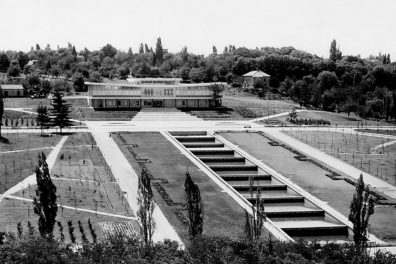
The Origins: The Background for Understanding the Museum of Yugoslavia
Creation of a European type of museum was affected by a number of practices and concepts of collecting, storing and usage of items.
New Mappings of Europe
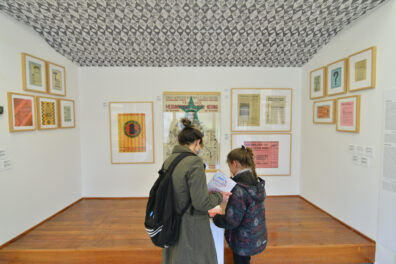
Museum Laboratory
Starting from the Museum collection as the main source for researching social phenomena and historical moments important for understanding the experience of life in Yugoslavia, the exhibition examines the Yugoslav heritage and the institution of the Museum