New Acquisitions of the Museum of Yugoslavia – Model for the Relief of King Peter I Karađorđević in Dubrovnik
The equestrian representation of King Peter I Karađorđević in relief, created by Ivan Meštrović at the request of the Dubrovnik Municipal Council in 1924, was part of a broader monumental policy of interwar Yugoslavia and one of the first monumental expressions of the new state that emerged after the World War I. Meštrović was invited by the Dubrovnik municipal authorities to create a liberation monument, which, due to limited funds, was created in a relief format, and not in a free-standing sculpture format. Being the “First Yugoslav King” and “Liberator”, Peter I was presented in the ancient model of adventus Augusti as a symbol of the unity of the South Slavs and the legitimization of the new political community.

The inscription for the monument which read: “TO THE FIRST YUGOSLAV KING PETER THE GREAT LIBERATOR DUBROVNIK MCMXIII’’, was authored by Meštrović himself.
The monument was ceremonially unveiled on December 1, 1924, on the anniversary of the unification of the Kingdom of Serbs, Croats and Slovenes, and placed in a symbolic place: the city walls at the Pile Gate, above the inner side of the entrance to Stradun. It was removed during World War II. Although it has physically disappeared from public space, this relief continues to intrigue the public and researchers even today. Thanks to preserved photographs, sketches and models, it is possible to reconstruct the story of the first Yugoslav monument in Dubrovnik, but also to understand its role in shaping the symbolic language of the Yugoslav state.


The monument was removed from the walls of Dubrovnik on May 21, 1941, and after the liberation it was stored in the Art Gallery, which was moved to the palace of Božo Banac, a shipowner and former friend of Meštrović. The plaster cast of the relief, together with the stone original, were walled up in 1975 between two walls in the museum space of the Dubrovnik Art Gallery, which was used by the Linđo folklore ensemble. Thus, for more than half a century, this work of art has been imprisoned and unavailable to public.
Ivan Meštrović is one of the most important Yugoslav artists who actively promoted the Yugoslav idea, not only through art, but also by participating in the Yugoslav Committee. The attachment to the idea of unity within Yugoslavia and the Karađorđević dynasty were embodied in shaping the political and cultural identity of the new state.

Year: 1922.
Dimensions: 113.7 X 98.6 x 10.7 cm
Material and technique: plaster, modeling
The Origins: The Background for Understanding the Museum of Yugoslavia
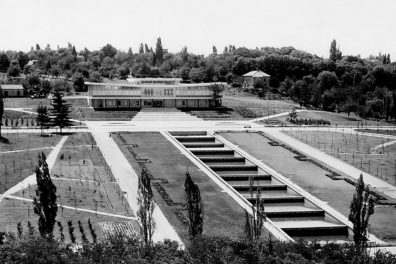
Creation of a European type of museum was affected by a number of practices and concepts of collecting, storing and usage of items.
New Mappings of Europe
Museum Laboratory
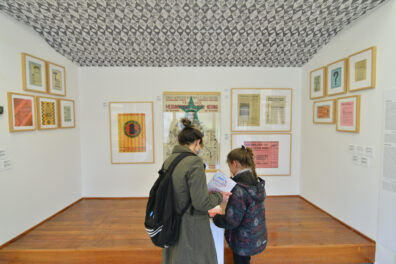
Starting from the Museum collection as the main source for researching social phenomena and historical moments important for understanding the experience of life in Yugoslavia, the exhibition examines the Yugoslav heritage and the institution of the Museum