Royal Gifts
21.07-25.08.2013
May 25 Muesum - The upper lobby
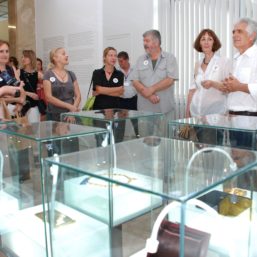
May 25 Museum - Exhibition Space (Right)
May 25 Museum - Exhibition Space (Left)
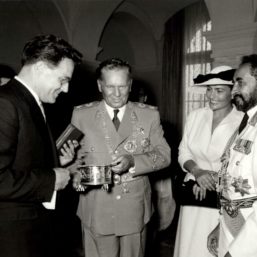
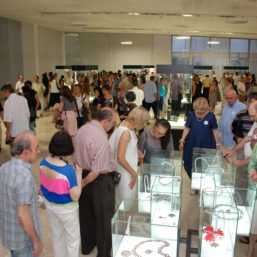
The exhibition Royal Gifts showcases an exclusive selection of gifts that Josip Broz Tito was presented with when meeting members of royal families from seventeen countries in Europe, Asia and Africa. It features sixty-eight unique artefacts, shining examples of craftsmanship, made in the most famous workshops around the world, divided into six segments: archaeological finds, objects for everyday use, decorative objects, jewellery, decorations and portraits of members of royal families. The chosen exhibits, covering the period from the 7th century BC to the first half of the 20th century are made of precious metals, gems and the finest porcelain.
The artefacts, documents and photographs will introduce the visitors to the etiquette and customs of the exchange of gifts between statesmen. Gift giving has a symbolic value across cultures and the exchange at the highest level is governed by the strict rules of protocol – from the choice of gifts, depending on the occasion, interests and status of the receiving party and the very act of conferring a gift, to the accompanying documents and the subsequent storing of the items received as gifts from Queen Elisabeth II of England, Reza Shah Pahlavi of Iran, King Paul I of Greece, Prince Norodom Sihanouk of Cambodia and the Emperor of Ethiopia, Haile Selassie among others.
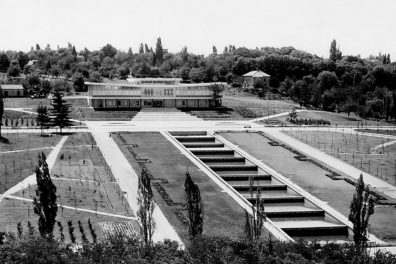
The exhibition will be opened in the remodelled building of the Museum “May 25th”, allowing royal gifts to be displayed in all their glory for local exhibition-goers and a large number of tourists, showing exceptional interest in the artefacts belonging to the collections of the Museum of Yugoslav History to enjoy.
Exhibition curators: Veselinka Kastratović Ristić and Momo Cvijović
Exhibition staging: Mina Milovančević
The exhibition will be open every day, except on Mondays, until August 25th, from 10 am to 8 pm
Additional information about the exhibits:
The rich array of Josip Broz Tito’s activities as a statesman is best illustrated by the fact that throughout his long rule, Tito met around 350 heads of state and government, went on 169 state visits and stayed in 73 countries by invitation. During these numerous meetings, he received a great many gifts that are kept today in the Museum of Yugoslav History. Some of these are prized possessions that even the world’s most important museums would be proud to have in their collections.
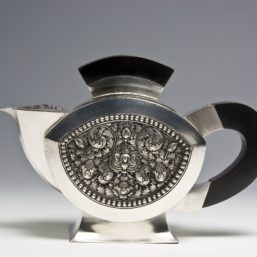
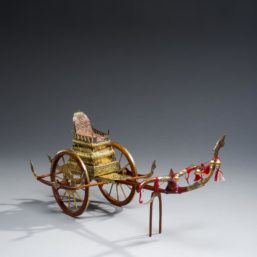
The largest number of exhibits are gifts from Prince Norodom Sihanouk of Cambodia whom Tito met most frequently: a fragment from a temple in Angkor Thom, the former Khmer capital, which had been kept in a museum before it was given to Tito as a gift; a silver tea set decorated with representations of the legendary creature, Garuda (according to the Hindu myth Garuda is the carrier of the god Vishnu), and a wood and metal model of an imperial two-wheeled cart, which is especially eye-catching.
During the 2,500 year celebration of the Persian Empire in Teheran in 1971, Reza Shah Pahlavi of Iran presented Tito with a replica of the Decree of Cyrus the Great, known as the Cyrus Cylinder, dating back to 539 BC. This famous clay cylinder-shaped document was placed under the walls of Babylon as a foundation deposit. It is regarded as the first written record of human rights, since it guarantees religious tolerance, bans slavery and grants the right to self-determination, as well as people’s right to take up a job of their own choosing. The Cyrus Cylinder is now kept in the British Museum, and its replica is on display in the United Nations building in New York, where it was translated into all six official languages of the U.N.
King Paul I of Greece and Queen Frederica, gave Tito a present of two gold replicas of the famous 15th century BC gold cups from Crete, while the statue of Buddha is a gift from Mohammad Zahir, King of Afghanistan. The Emperor Haile Selassie gave Tito a unique gift on the occasion of the First Non-Aligned Movement Summit, held in Belgrade in 1961 – a writing set shaped like a model of the imperial throne.
The audience will not be able to see the actual gift received from Queen Elisabeth II, but will find out that the Queen decided to give Tito and his wife 10–12 pairs of parrots and sent the gift with detailed instructions about a special cage to be made in the island of Vanga, as well as about the parrots’ habits, breeding, etc.
A special segment consists of the decorations all countries featured in the exhibition awarded to Tito in recognition of the deeds performed in war and peace. Among them, the most venerable European ones stand out – the Danish Order of the Elephant (founded in 1464), the Swedish Order of the Seraphim (the second half of the XVI century) and the British Order of the Bath (founded in 1399 and re-established in 1725).
The Origins: The Background for Understanding the Museum of Yugoslavia
Creation of a European type of museum was affected by a number of practices and concepts of collecting, storing and usage of items.
New Mappings of Europe
Museum Laboratory
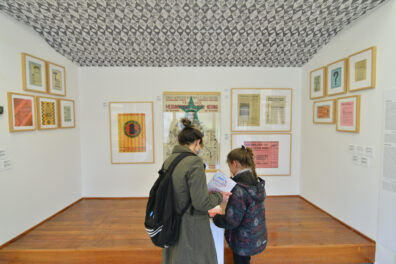
Starting from the Museum collection as the main source for researching social phenomena and historical moments important for understanding the experience of life in Yugoslavia, the exhibition examines the Yugoslav heritage and the institution of the Museum