The Last Young Yugoslavs
17.12.2011-15.01.2012
The Last Young Yugoslavs examines the production of alternative pop-youth culture in SFR Yugoslavia at the end of the 1970s and the beginning of the 1980s both within the establishment (cultural centres, official media and youth press) and on the margins (informal social networks through which fanzines and other DIY creations were distributed). Young artists, heartened by the freedom of expression achieved by the punk movement, introduced new and, compared to earlier times, highly democratic models for self-organisation and subculture activity to the sphere of mass culture. This became evident in all areas of public life, beginning with the independent music scene, followed by fanzines and other unofficially produced graphic material, youth publications and official media such as Radio Television Belgrade. The music scene was the focus for organising new ways to socialise (merging concerts, parties and spontaneous art happenings), various artefacts (fliers, posters and music cassettes, comix, paintings, artist fanzines and magazines) and, most essentially, images, in the sense of looks and appearance.
The socio-political context in which this process developed was dominated by debate about the 1974 Constitution and its ramifications which could be seen, among other effects, in a weakening of federal bodies and the rise of a political and cultural elite within the republics, which had begun to declare themselves along national lines. This was the time when the integrated Yugoslav cultural space began to fragment and the official and dissident cultural spheres began to degenerate into Serbian, Croatian and so on.
The new community of youth culture was still not part of this process at the end of the 1970s and the beginning of the 1980s. Nor was there any inkling of ethnic identification in the subculture which nourished their methods and their style. In that sense, The Last Young Yugoslavs is a name for the last wave of innovation within the integrated cultural space of Yugoslavia which brought high and low culture together and had a formative influence on several generations of young people who grew up during the final years of Yugoslav socialist self-management. The source of these cultural innovations was outside the institutions of the time, but they were very quickly recognised and promoted so that, before long, even the marketplace absorbed and exploited them through the entertainment industry.
The Last Young Yugoslavs is to do with a period of initiation and institutional recognition of a cultural matrix which, in hindsight, was dubbed “new wave”. The focus is on a time when improvisation and experiment ruled, a time before emblematic music groups signed deals with big record labels and were absorbed into the Yugoslav mainstream.
In defining the timeframe encompassed by the exhibition, it is important to consider that the mode of expression which characterizes this production had not developed to the point of recognition before 1977 but that, by about 1984, that recognition was transformed into an advertising resource for record labels. By about 1984, the majority of the figures from the alternative scene had either turned professional or had completely given up on art, so that the initiating element of self-organisation was lost. The focus on Belgrade here is for pragmatic reasons, given that the quantity of relevant raw material is not even adequate to present all aspects of the Belgrade scene. This writer’s view of the Belgrade episode of The Last Young Yugoslavs is thus offered as a proposal for further research, which would be possible only through collaboration with other centres of the former Yugoslavia.
Exhibition curators,
Marina Martić and Stevan Vuković


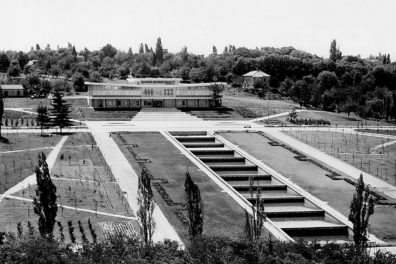
The Origins: The Background for Understanding the Museum of Yugoslavia
Creation of a European type of museum was affected by a number of practices and concepts of collecting, storing and usage of items.
New Mappings of Europe
Museum Laboratory
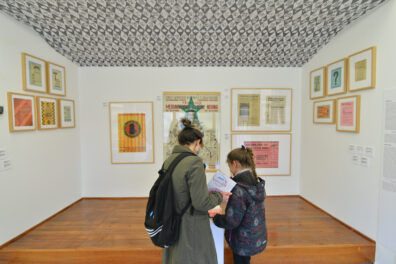
Starting from the Museum collection as the main source for researching social phenomena and historical moments important for understanding the experience of life in Yugoslavia, the exhibition examines the Yugoslav heritage and the institution of the Museum