Serbia Through Centuries
12.02-12.03.2014
To mark Sretenje, Serbian National Statehood Day, the Museum of Yugoslav History, under the patronage of the government of the Republic of Serbia hosts the exhibition SERBIA THROUGH CENTURIES (Un)expected Stories from the History of Serbia
The exhibition Serbia through Centuries reminds the visitors of the facts from the history of Serbia, allowing them to discover interesting details from the past and find history-related themes in different aspects of life. It inspires us to take a look back at certain events from the cultural, economic and political history and reminds us that information about history can be found in unexpected places and objects….
The exhibition showcases just a few of the possible stories told by the exhibits from the collections of the Museum of Yugoslav History: the tales are about the ship that the last Turkish commander boarded and left Serbia, Serbian gold coins, Sinan Pasha’s sabre, the struggle for the recognition of the popular Serbian language, military strategies of Serbian Vojvodas, the creation of the national book stock, wartime money in the Kingdom of Serbia, the royal yacht belonging to the Karađorđević dynasty, the “defective” stamps posthumously honouring King Alexander….
The exhibition SERBIA THROUGH CENTURIES features fourteen exhibits from the collections of the Museum of Yugoslav History that were given to Josip Broz Tito as gifts. Rich in content, they span eight centuries of Serbian history, in a unique way, almost without skipping any of its important periods, from the time when the country was founded in the 12th century, until the death of King Alexander Karađorđević in 1934. Gold and silver coins bear witness to the rise of the Serbian state in different periods of history. Sabres tell of the battles fought for liberation from two great European empires, Turkey and Austria-Hungary. Models ships, books and dictionaries testify to technological and cultural development respectively. Together, they are the pillars of historical memory of a small nation and its continuous struggle to preserve national pride.
The reasons for displaying them do not lie exclusively in their above-mentioned value. As we follow each individual exhibit and move through history, one of them will bring back to mind the sad fate of the great Serbian poet, Vladislav Petković Dis. He lost his life on a ship that was taking him back to Serbia from France. It was sunk by German submarines in the vicinity of Corfu in 1917. He may have been on the very ship that was carrying the bulk of Serbian wartime gold and silver coins minted in France, a rare specimen of which is shown at the exhibition. The royal yacht belonging to the Karađorđević dynasty was converted, after World War II, into the equally grandiose river ship, Krajina used by Josip Broz Tito. Today, sadly, this ship is rotting away, grounded under the Gazela bridge. Looking at the model of the first Serbian steamer, Deligrad, some will spot the last Turkish commander, Ali Riza Pasha, on the deck, leaving Belgrade in 1867. Soon after, Serbia officially became an independent state, in the wake of the Berlin Congress.
The exhibition premiered in 2012 in the Kragujevac Town Museum
Exhibition curators: Veselinka Kastratović Ristić, Momo Cvijović and Ana Panić
Design: Andreja Mirić and Monika Lang
Organized and produced by the Museum of Yugoslav History
Partner: National Library of Serbia


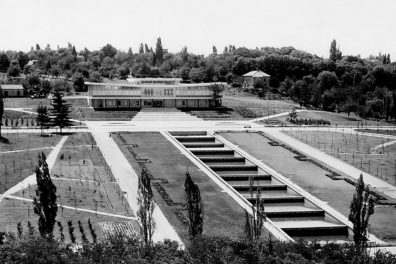
The Origins: The Background for Understanding the Museum of Yugoslavia
Creation of a European type of museum was affected by a number of practices and concepts of collecting, storing and usage of items.

New Mappings of Europe
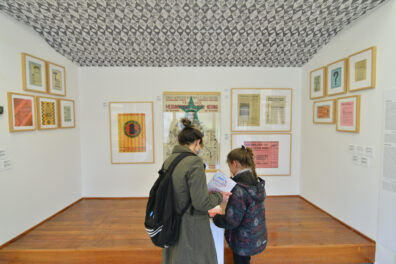
Museum Laboratory
Starting from the Museum collection as the main source for researching social phenomena and historical moments important for understanding the experience of life in Yugoslavia, the exhibition examines the Yugoslav heritage and the institution of the Museum