Biography of King Alexander I Karađorđević
16. decembar 1888. He was born in Cetinje, as the fourth child of Prince Peter Karađorđević and Princess Ljubica-Zorka, née Petrović, daughter of Prince Nikola I Petrović.
1894. He moved to Geneva, where he finished elementary school.
1899. He enrolled Pravovedenie in Saint Petersburg.
1903. Alexander came to Serbia, where he continued his education, and in the same year joined the Sixth Regiment of the Serbian Army.
1905. He was admitted into the Page Imperial Corps in Russia.
1909. Alexander Karađorđević became the heir to the throne, after his older brother Đorđe abdicated.
1912. In the First Balkan War, Alexander, as the commander of the First Army, won an important victory over the Turks in the Battle of Kumanovo in October 1912, as well as in the battles of Prilep and Bitola.
1913. In the Second Balkan War (June 29 – August 10), the First Serbian Army, led by the Crown Prince Aleksandar Karađorđević, defeated the Bulgarians.
24. jun 1914.Due to the illness of King Peter I, he became Regent of the Kingdom of Serbia and the Supreme Commander of the Serbian Army.
28. jun 1914. The World War I began, and Regent Alexander as the Supreme Commander of the Serbian Army, led Serbia through the Great War, the first Allied victories and the Albanian Golgotha. He led his army in the breakthrough of the Salonika front and in liberation of both Serbia and other territories of the future common state.
1. decembar 1918. The Crown Prince Alexander Karađorđević, proclaimed a new state, the Kingdom of Serbs, Croats and Slovenes, with the Karađorđević dynasty at the head.
1919. Regent Prince Alexander announced the work on the internal organization of the newly created state, first of all, on agrarian reform, which abolished the remaining feudal and colonial relations in the newly liberated territories.
1920. The Government of the Kingdom of SCS passed the Proclamation, which suspended the work of the Communist Party of Yugoslavia.
28. jun 1921. The Constitution was adopted, by which the Kingdom of SCS was declared a constitutional, parliamentary and hereditary monarchy. The same day, Spasoje Stejić, member of Communist party of Yugoslavia, attempted assassination of regent Alexander.
16. avgust 1921. Regent Alexander became the king after the death of Peter I Karađorđević.
1921. Due to King Alexander I Karađorđević’s great efforts, the creation of the Little Entente military alliance between Czechoslovakia, the Kingdom of SCS and Romania was completed.
1922. King Alexander I Karađorđević married the daughter of the Romanian King Ferdinand, Maria Hohenzollern, with whom he has three sons, Petar, Tomislav and Andrej.
6. januar 1929. Following a long internal political crisis, the king abolished the Constitution and dissolved the Assembly. According to the Law on the King’s Power and Supreme State Administration, the king was declared the bearer of all power in the Kingdom of SCS. In the same year, the country changed its name to the Kingdom of Yugoslavia.
1931. King Alexander I enacted the Constitution, called the Imposed Constitution, to end his own unlimited power.
1934. Due to great efforts of King Alexander I, the Balkan Alliance was formed, which, in addition to the Kingdom of Yugoslavia, also included Romania, Greece and Turkey. The aim was to preserve the peace in the Balkans and the integrity of the member states.
9. oktobar 1934. In Marseille, in an assassination organized by the separatist Ustashe and VMRO forces, King Alexander I Karađorđević was assassinated.
18. oktobar 1934. He was buried in the church of St. George in Oplenac, following several days of a mourning procession and a requiem service in Belgrade.
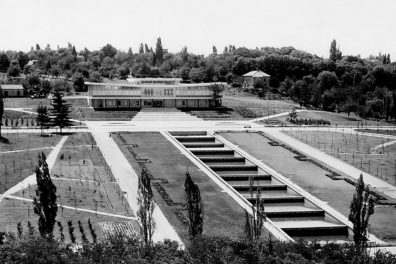
The Origins: The Background for Understanding the Museum of Yugoslavia
Creation of a European type of museum was affected by a number of practices and concepts of collecting, storing and usage of items.
New Mappings of Europe
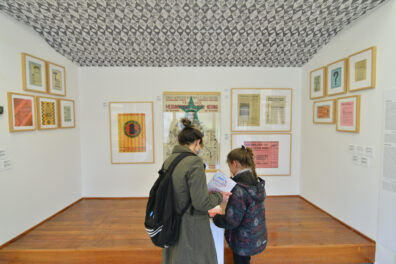
Museum Laboratory
Starting from the Museum collection as the main source for researching social phenomena and historical moments important for understanding the experience of life in Yugoslavia, the exhibition examines the Yugoslav heritage and the institution of the Museum