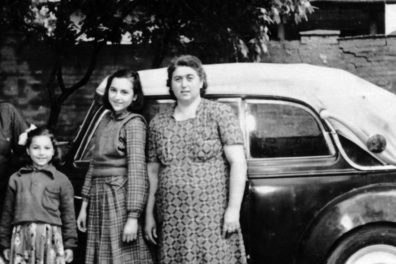
Maria Karađorđević – The Queen of Yugoslavia
Minjon – The Romanian Princess
As a grand spectacle, the wedding of King Alexander I Karađorđević and Romanian Princess Maria Hohenzollern required extensive organization. A State Committee was formed, composed of numerous prominent political and cultural figures of the time, led by Dobra Mitrović, the president of the Belgrade Municipal Council, and including the governor of the National Bank and the Minister of Education. The preparations were overseen by the Queen of Romania, who, during her visit to Belgrade in April 1922, assessed that the royal palace needed renovations. Queen Marie of Romania considered the royal residence in Belgrade rather modest and expressed her dissatisfaction with its exclusively male administration. Additionally, the history of the royal residence, shrouded in dark tales of regicide, left a negative impression.
Branislav Nušić, head of the Artistic Department at the Ministry of Education, played a key role in conceptualizing and organizing the wedding. It was an enormous responsibility that encompassed not only the visual and logistical aspects of the ceremony but also everything else—from accommodating guests to procuring decorations.

Kraljica Marija u vožnji automobilom, Fotoarhiva Fonda Kraljevski dvor
The wedding of the Yugoslav King and the Romanian Princess was a global event—a spectacle unseen in the modern history of Belgrade. The entire event followed a meticulously planned program and court protocol. As early as June 4, the Romanian royal family ceremonially departed from Bucharest to Orșova and then continued their journey to Belgrade aboard the royal yacht. The yacht arrived in the Belgrade port on June 6, where it was greeted with a grand reception. The celebrations lasted late into the night, culminating in a lavish dinner during which the future bride received a tiara and an opulent emerald chain from King Alexander, along with a sapphire star adorned with diamonds and numerous other precious gifts. Every free moment over the following days was dedicated to Minjon’s hairstylist and milliner, as she had to appear flawless for every public occasion. On June 7, the royal couple received well-wishers at the palace. The following day marked the grand state-royal event and the wedding ceremony at the Belgrade Cathedral.
Although primarily a dynastic union, Minjon considered it natural to accept marriage with a man who aspired to build a family and strengthen his country. Such a life seemed both appealing and challenging to her. According to her mother, King Alexander and Queen Maria shared a bond of friendship, compassion, and deep mutual respect. At the age of twenty-two, Minjon became the Queen of the Balkans, her personal life deeply intertwined with the fate of her husband and his country. Like her mother before her, she became the queen of a land marked by intense national and political tensions, to which she had to adapt. However, before anything else, Maria had to adjust to life in a foreign country. Although King Alexander was attentive to her, the court protocol and administration were rigid and uncommunicative. Immediately after the wedding, as she herself recounted, she began studying “our language” (Serbian and Croatian) as well as the history of the Balkans in great depth. This was necessary for state affairs, public representation, and the mission of the royal household. For the young queen, adapting to her new status and public duties was anything but simple.

Venčanje kralja Aleksandra I i rumunske princeza Marije, Beograd, 08.06.1922. Zbirka Muzeja Jugoslavije
Shortly after the wedding, Queen Maria was granted possession of the castle in Bled. She was thrilled about decorating the palace and sought the services of landscape architect Fritz Rebhuhn, who had also designed the park in Sinaia. She enjoyed traveling through Slovenia and various parts of the kingdom. However, her life was far from idyllic. Letters to her mother reveal that she struggled with wearing heavy jewelry and elaborate ceremonial gowns, finding official court events exhausting. Nonetheless, she had the support of Prince Paul and Princess Olga Karađorđević, who helped her adjust to her new way of life.
The construction of the royal residence in Dedinje became a major focus for the royal couple, and Maria eagerly took part in its decoration. The Royal Palace was built between 1924 and 1929, based on designs by architect Živojin Nikolić. According to Dr. Dijana Mandaš’s research, in 1927, the king and queen invited architect Karel Liman to oversee the interior design of the Dedinje residence. A Czech architect renowned for his work on numerous Romanian royal estates, Liman was recommended by Queen Maria of Romania herself.
Records from Romanian archives and the Archives of Yugoslavia indicate that Liman’s interior designs were executed by the Viennese furniture manufacturer Bernhard Ludwig, known for furnishing both the Viennese and Romanian royal courts. The architectural elements of the palace’s interior, particularly its underground spaces, were designed by architect Nikola Krasnov with the help of numerous Russian artists.
The influence of the Romanian court on the design of King Alexander’s new villa in Dedinje was significant. Queen Maria of Romania frequently provided suggestions to King Alexander, and the stylistic similarities between the Dedinje palace and the palaces of Sinaia were not merely a result of employing the same craftsmen. They also reflected the shared approach of the two Balkan courts in using architecture for representation—combining national authenticity with a Byzantine heritage.

Kraljica Marija Karađorđević sa sinovima Petrom, Tomislavom i Andrejem, 30-tegodine 20. veka, Zbirka Muzeja Jugoslavije
Life in the Karađorđević royal family was governed by the Family Rulebook, which applied to all members of the royal household, including the king, queen, their three sons, the king’s brother Prince Đorđe, his uncle Prince Arsen, as well as Prince Pavle and Princess Olga with their children. According to the 1930 amendments to the Rulebook, the king held absolute authority over his family, and all members were required to obtain his approval for their decisions.
Through the press and media, a public image was carefully crafted—one that portrayed Queen Maria as content with her life and role, embodying modesty and devotion. However, her personal correspondence reveals that her primary focus was indeed her family and children. Her role as a devoted mother, a self-sacrificing and humble wife, was widely emphasized, resonating deeply with the patriarchal society of the Balkans. The public followed court life with enthusiasm, and the media regularly reported on royal affairs. Postcards and portraits of the royal family were mass-produced, and the births and christenings of Crown Prince Peter, Prince Tomislav, and Prince Andrej were celebrated as national events.
Queen Maria was deeply involved in her children’s upbringing, ensuring they were raised with care and attention. The royal couple was eager for their children to spend time with “ordinary” children and introduced them to public responsibilities by assigning them roles as patrons of various cultural and educational institutions.
Amid the demands of public duties, family expectations, and her personal life, Queen Maria still found moments for herself. She loved reading, enjoyed car rides and walks with her children, and took great pleasure in decorating the royal residences. Yet, in letters to her mother and sisters, she often expressed a longing for a simpler life.

Kraljica Marija u vožnji automobilom, Fotoarhiva Fonda Kraljevski dvor
Research indicates that the queen had no political influence on the king’s decisions, but she closely followed his public activities. In the autumn of 1933, King Alexander embarked on several state visits—to Romania, Bulgaria, Turkey, and Greece—with the goal of establishing the Balkan Pact in 1934, which also determined the way of life for the Yugoslav royal family. In October, the royal couple was invited on an official visit to France. The king traveled by destroyer from Zelenika to Marseille, while the queen went directly to Paris, where she was supposed to wait for her husband so they could attend the official reception together. The king’s assassination in Marseille on October 9 drastically changed her life. The queen narrowly escaped death by mere chance, but she had to remain composed in order to face the forthcoming challenges. As a sign of deep mourning, she wore black for two years. In the patriarchal environment of the Balkans, with its traditional views on the role of women, the existing sympathies toward her grew even stronger after the king’s tragic death. Amid the turbulent political turmoil of the final years of the Kingdom of Yugoslavia, the queen sought to preserve her family’s position, maintain her dignity, and continue her public engagements.
Milan Stojadinović, following the king’s death, stated that an “open war” existed within the royal household between the Queen Mother and Princess Olga, along with a covert desire for Prince Paul’s temporary position to become permanent. Her letters indicate that she was deeply unsettled by the escalating political tensions, where anything could happen at any given moment. The public increasingly turned its attention to the regent, Prince Paul, largely due to media influence. From 1935 onward, Prince Paul and his family became the focal point of media coverage.
After the king’s assassination, the queen sought solace among friends and attempted to dedicate her free time to personal fulfillment. As she loved driving, she was often seen not only in Belgrade but also along the Yugoslav coastline. She owned several luxurious cars, gifts from the king. Like her mother, she took part in decorating villas in Bled and Belgrade, as well as in the construction of Miločer. However, her greatest passion was art—she engaged in drawing, painting, and sculpting. Within the Royal Complex in Dedinje, she had her own sculpting studio in the Peasant House (Straw House). She maintained close relationships with sculptors, particularly Ivan Meštrović and sculptress Iva Despić Simonović.
In the autumn of 1936, she requested precise dimensions of the Virgin Mary from the Balchik Monastery from her mother. A year later, the sculpture Madonna Stella Maris, the protector of the sea and the home of Queen Marie of Romania, was crafted from white marble and sent to Balchik’s Tenha Yuvah. The sculpture, created by Queen Maria, was directly influenced by Meštrović’s artistic expression. It was placed at the center of the complex, which was one of the Romanian queen’s favorite retreats. Her only surviving work in Belgrade, created in 1936, is Knight in Contemplation, a bronze sculpture depicting a thoughtful knight with a bowed head, draped in a long cloak, his hands resting on a long medieval sword. Today, it is housed in the Royal Palace within the Royal Complex in Dedinje.
Besides art, from 1935 until the late 1930s, Queen Maria increasingly surrounded herself with art objects, particularly those made of jade. As she noted herself, she never imagined she would become a collector, but at some point, she became fascinated with antique objects of exquisite craftsmanship. In addition to porcelain and jade, Queen Maria also had a personal collection of valuable jewelry received as wedding gifts and as an inheritance after her mother’s death. Today, these items are found in various private collections and museums worldwide, with the majority of the artistic objects housed in museum collections in Romania.
On the day of their wedding, the Royal Office Fund was established with the aim of awarding and sponsoring individuals for their outstanding achievements in moral, cultural, and civic progress. The king and queen were often patrons or benefactors of many organizations and institutions, such as the Red Cross Society, the Princess Ljubica Society, and the Princess Zorka Society, among others. After the king’s assassination, the Office of Queen Maria was established within the institution of the Royal Court of the Kingdom of Yugoslavia, through which the queen continued her humanitarian work and patronage in an institutionalized manner. Her scope of activity was broad, ranging from educational and cultural institutions to the care and support of children’s homes and shelters. Her patronages also extended to sports events and automobile racing.

Kraljica Marija Karađorđević u poseti Dunavskom dečjem obdaništu, 30-te godine 20. veka, Beograd, Zbirka Muzeja Jugoslavije
Parallel to the construction of Miločer, in the late 1930s, Queen Maria purchased a house and a modest estate, Old Mill House, in Sandy, Bedfordshire (England). From 1938 onward, she lived there withdrawn from public life, leading a simple existence. In one of her last letters to her mother, she wrote about how content she was with life in that house.
Queen Maria remained in Yugoslavia until her mother’s death in 1938, after which she spent increasing amounts of time in England, where she was caught by the outbreak of war and from where she would never return. Soon after the war, almost all monarchies in Southeastern Europe would disappear, along with the Kingdom of Yugoslavia.
In exile, the queen continued her charitable and humanitarian work. She served as president of the Red Cross in London, through which she provided food and clothing aid to Yugoslav prisoners of war. One of her last public appearances was on April 9, 1941, when she addressed the BBC, appealing to preserve the unity of the country and trust in the king and the army. She reminded listeners of the king’s final words: “Take care of Yugoslavia.” Just days earlier, on April 6, 1941, Yugoslavia had been devastated, becoming the site of a brutal war. The young king and the government went into exile.

Kraljica Marija Karađorđević (foto: Tonka, Zagreb) Zbirka Muzeja Jugoslavije
On the 25th anniversary of the assassination in Marseille, on October 9, 1959, Charles de Gaulle awarded Queen Maria Karađorđević the Grand Cross of the Legion of Honor as a token of gratitude for her family’s sacrifice. This was the last public appearance of the Yugoslav queen.
She passed away on June 22, 1961, in London and was buried near Windsor Castle. Her remains were transferred to the Church of St. George in Oplenac in 2013.
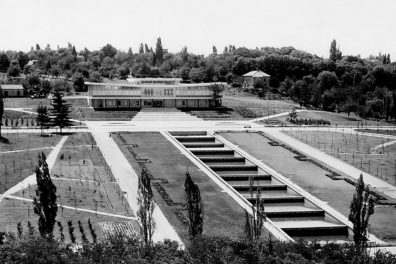
The Origins: The Background for Understanding the Museum of Yugoslavia
Creation of a European type of museum was affected by a number of practices and concepts of collecting, storing and usage of items.

New Mappings of Europe
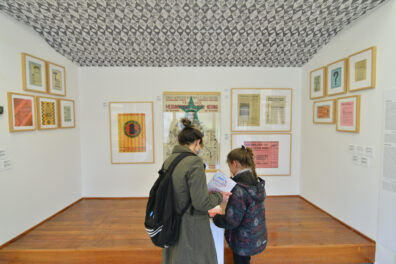
Museum Laboratory
Starting from the Museum collection as the main source for researching social phenomena and historical moments important for understanding the experience of life in Yugoslavia, the exhibition examines the Yugoslav heritage and the institution of the Museum